
Union County Criminal Court Records
A criminal court record is the court-maintained case file, not just a booking entry or police report. In Union County, the Clerk of Superior Court is the custodian for Superior Court criminal filings. The Clerk's office handles criminal affairs and filings made in Union County Superior Court. Those records can include indictments, accusations, motions, docket entries, pleas, dispositions, sentencing orders, probation terms, restitution, and bond-related court orders.
Union County criminal court records can also connect to earlier limited-court activity. Magistrate Court locally lists warrants, bond hearings, committal hearings, first appearance hearings, possession of marijuana, petty theft, and bad checks. Those events may occur before a felony file is complete in Superior Court. Sheriff incident, arrest, and citation records are separate access channels and are better treated as source records that may lead into the case file. For charge details before the full outcome, see the Union County arrest records and court charges page.
Search Union County Criminal Court Records
No single Union County criminal case search portal was located for all Superior and Magistrate criminal records. The practical route is direct: contact the Clerk of Superior Court for filed Superior Court criminal case records and contact Magistrate Court for warrant, bond, first appearance, and committal hearing matters. Union County's open-records page routes court records to the Clerk of Superior Court and sheriff citations, arrests, incidents, and investigations to the Sheriff's Office.
- Decide whether the requested file is a court case record, a sheriff report, a warrant matter, or a custody record.
- For Superior Court criminal records, call or visit the Clerk of Superior Court with the defendant name, case number if known, and date range.
- For warrants, first appearances, bond hearings, and committal hearings, contact Magistrate Court because those matters may exist before a Superior Court case is complete.
- For incident reports, accident reports, arrest reports, and sheriff citation records, contact the Sheriff's Office records channel and be ready to show state-issued ID before release.
- For certified court copies, request the record from the office that keeps the court file rather than relying on an index or third-party summary.
Statewide systems have limited roles. Georgia Courts eAccess points users to provider sites and account-based searches, while GBI record restriction materials explain criminal-history restriction. GDC offender search applies after a person is in state custody; it is not the same as a Union County criminal court case search.
A manifest image sourced from the Georgia Bureau of Investigation record restriction page shows the state channel for limiting eligible criminal-history access.
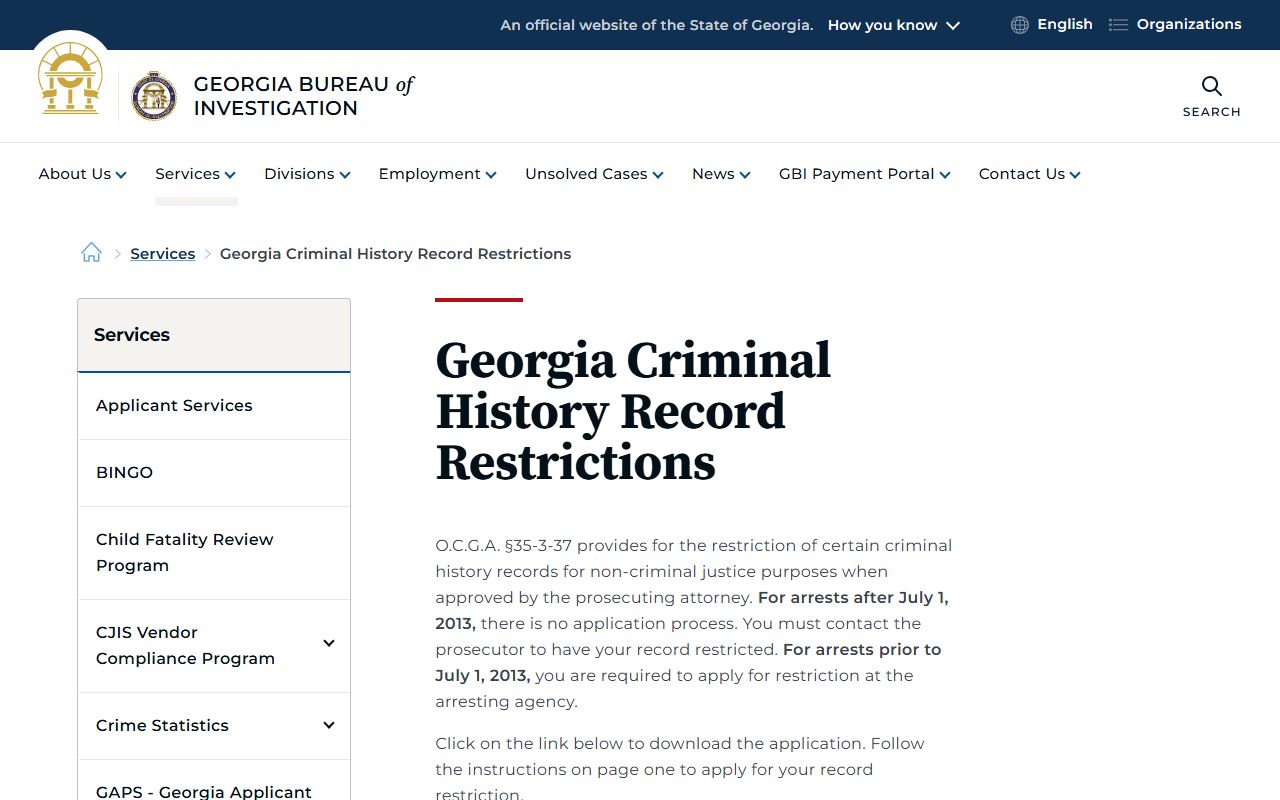
That state process can affect criminal-history visibility, but it does not replace the Clerk's control of the court case file.
Union County Criminal Case Flow
Criminal court records develop over time. An arrest or warrant may start the public trail, but the court record grows as prosecutors file charges and the court holds hearings. The Enotah Judicial Circuit District Attorney is relevant because prosecutors decide which charges proceed and handle felony prosecution. The Public Defender may represent eligible defendants who qualify for appointed counsel.
Case flow: Charges Filed › Arraignment › Pretrial / Motions › Plea or Trial › Disposition › Sentencing
| Stage | What Happens |
|---|---|
| Charges filed | A complaint, accusation, indictment, or related charging paper starts or advances the court case. |
| Arraignment | The defendant formally responds to charges, often by plea. |
| Pretrial and motions | The parties file requests, notices, and orders before plea or trial. |
| Plea or trial | The case resolves by guilty plea, nolo plea, trial verdict, dismissal, or other disposition. |
| Sentencing | The court records jail, prison, probation, fines, restitution, and other terms after conviction. |
What Union County Criminal Records Show
A Union County criminal court record should be read field by field. A charge line does not always mean a conviction. A docket entry may show only that a motion was filed, while the document itself may need to be requested. Disposition and sentence entries are the key outcome fields. When a case is active, some entries may be incomplete or subject to later amendment.
| Field | What It Shows |
|---|---|
| Case number | The court identifier used by the Clerk or court office to locate the criminal file. |
| Defendant | The person charged in the criminal case. |
| Prosecutor | The District Attorney or prosecuting office handling the charge. |
| Charges | The alleged offenses filed with the court, including amendments, reductions, dismissals, or added counts where shown. |
| Docket entries | Arraignment, motions, hearing notices, bond orders, continuances, plea events, and court orders. |
| Plea | The defendant's formal response, such as guilty, not guilty, or nolo contendere. |
| Disposition | The outcome, such as dismissed, acquitted, guilty plea, conviction, or other final result. |
| Sentence | Jail, prison, probation, fines, restitution, conditions, and related court orders after conviction. |
The Enotah Judicial Circuit prosecutor source in the manifest is the Prosecuting Attorneys' Council profile for District Attorney Jeff Langley.
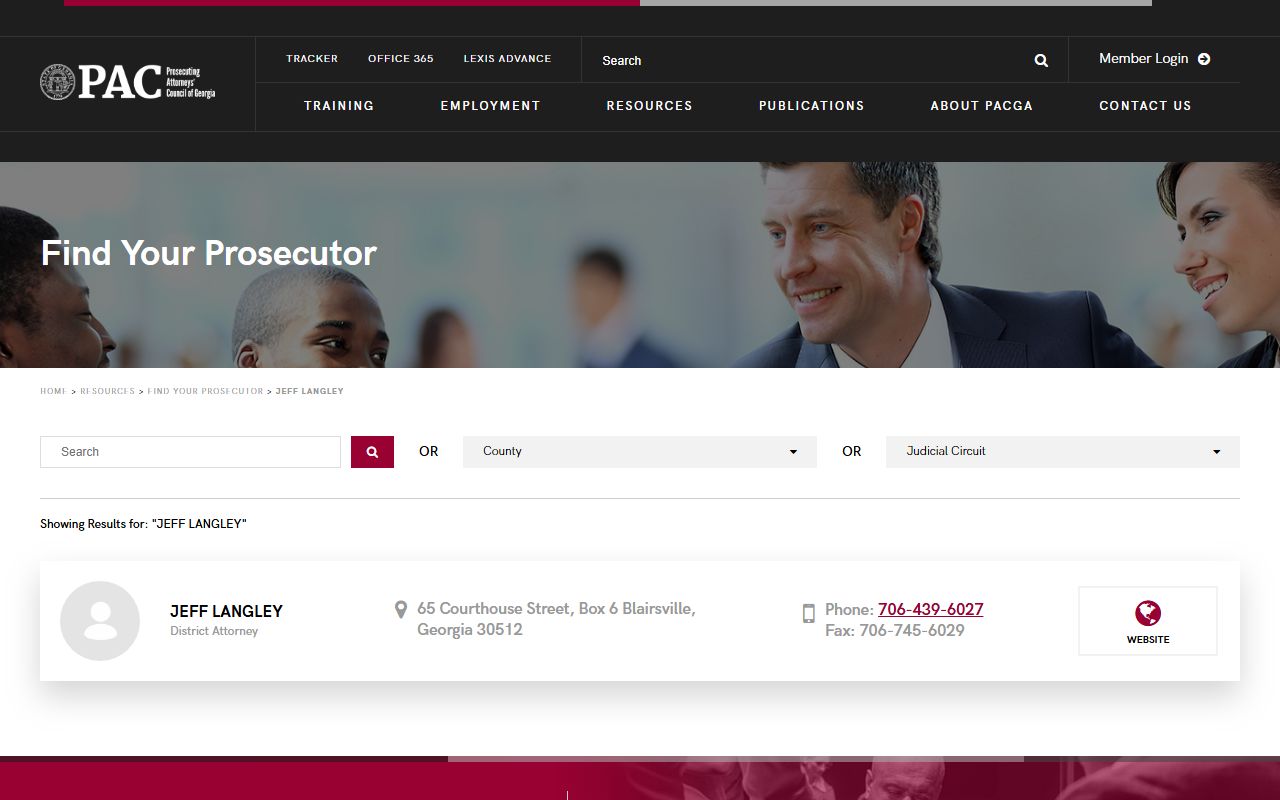
That source confirms the local prosecution office that may receive completed investigations and decide how criminal charges proceed.
Union County Charges vs Convictions
A charge is an allegation filed or pursued in court. A conviction is an outcome after a guilty plea, nolo plea treated by the court, or trial verdict. Union County criminal court records may show charges that were later amended, reduced, dropped, dismissed, or resolved in a way that does not equal conviction. The final disposition and sentence fields must be checked before treating a charge as an outcome.
| Charge | Conviction | |
|---|---|---|
| Meaning | An offense alleged by the state or charging authority. | A final finding or plea outcome entered by the court. |
| Where it appears | Charging document, docket, warrant, or case entry. | Disposition, sentence, judgment, or final order. |
| Can change | Yes. Charges may be amended, reduced, dismissed, or declined. | Changes usually require later court action, appeal, or legal relief. |
| Search caution | Do not treat it as guilt by itself. | Read sentence and restriction status before relying on it. |
Read Dispositions and Sentences
The disposition is the result of a charge or case. It may say guilty, dismissed, nolle prosequi, acquitted, bound over, reduced, or another status depending on the court entry. A sentence is different. It records punishment or conditions after conviction, such as jail, prison, probation, fine, restitution, or special terms. In Union County, these entries are most useful when read with the court name and case stage.
Sentencing data can also connect to custody records. A person held at the Union County Jail may be awaiting court, serving a sentence up to 12 months, or waiting for state placement after a more serious sentence. A state custody result from GDC is not the same as the local court file. The criminal court record remains the better source for the charge, plea, disposition, and sentence that led to custody.
Note: A sheriff arrest record may show initial charges, while the criminal court record shows how those charges ended.
Sealed vs Restricted Records
Georgia uses the term record restriction for many criminal-history limits. The GBI explains that O.C.G.A. 35-3-37 governs restriction for eligible records. For arrests after July 1, 2013, the person contacts the prosecutor. For arrests before that date, the person applies at the arresting agency. If the issue is a court record rather than only criminal history, a court petition or order may also be needed.
| Sealed Court Record | Restricted Criminal History | |
|---|---|---|
| Primary effect | Limits public inspection of the court file or part of it. | Limits criminal-history access for non-criminal justice purposes. |
| Likely contact | The court and Clerk of Superior Court if the case file is affected. | Prosecutor for newer arrests or arresting agency for older arrests. |
| Common reason | Court order, confidentiality rule, juvenile status, or sealed proceeding. | Eligible arrest or disposition under Georgia restriction law. |
| Public search result | May be hidden, redacted, or unavailable. | May be limited in criminal-history systems, but court files may need separate action. |
A manifest image from the Georgia Public Defender Council Enotah Circuit page shows the defense office tied to Union County criminal cases for eligible defendants.
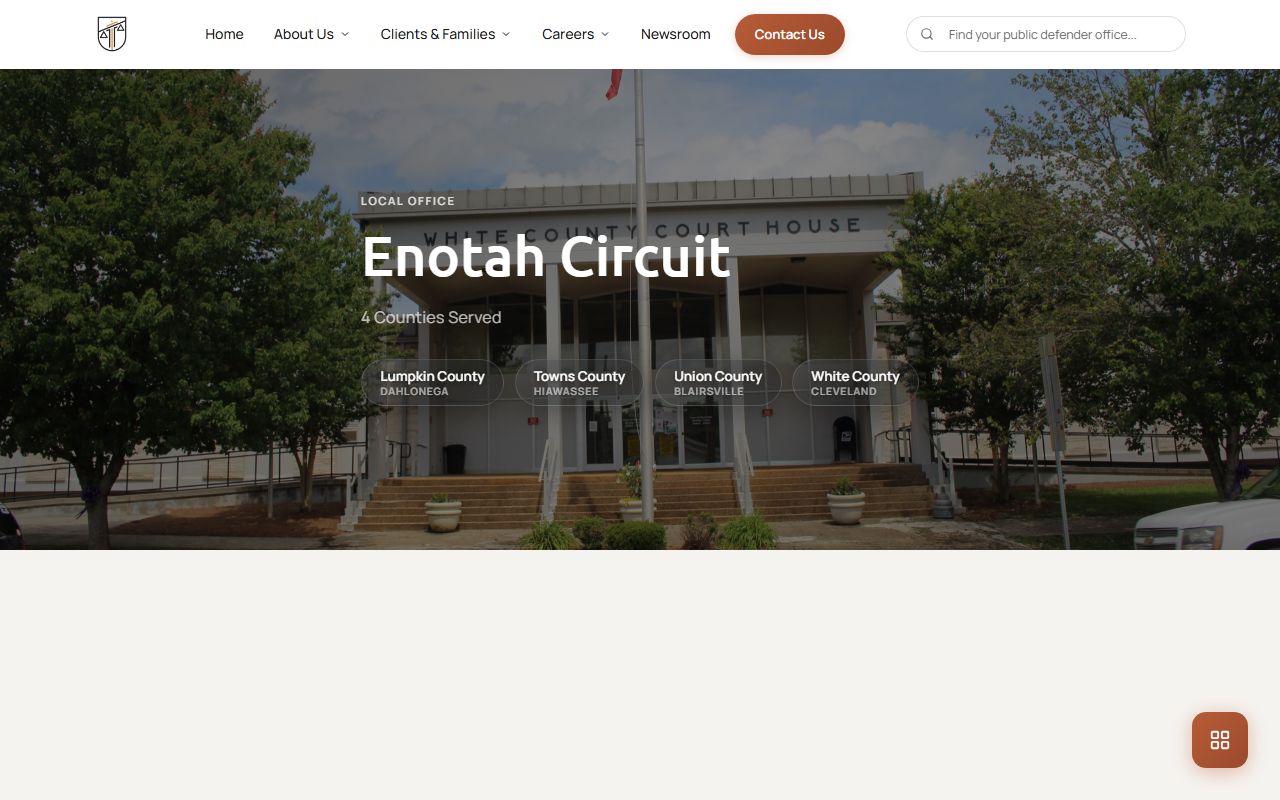
Defense counsel information is relevant to court records because appearances, motions, and plea documents may list appointed or retained counsel.
Public Access to Criminal Records
Georgia's Open Records Act, including O.C.G.A. 50-18-70 et seq., supports access to existing public records unless an exemption, court order, or confidentiality law applies. Union County's open-records routing page directs court records to the Clerk of Superior Court and sheriff citations, arrests, incidents, and investigations to the Sheriff's Office. That local routing should be followed before using broader statewide paths.
Key Statutes:
O.C.G.A. 50-18-70 et seq. defines Georgia public-record access and supports inspection of existing non-exempt records.
O.C.G.A. 35-3-37 governs criminal-history record restriction and explains the prosecutor or arresting-agency path.
State and Federal Criminal Records
Some criminal records tied to a Union County person may sit outside the county court file. Federal matters use the Northern District of Georgia federal trial court, the U.S. Attorney's Office for the Northern District of Georgia, federal CM/ECF systems, and PACER. State-prison custody uses GDC tools. These systems can be useful, but they do not replace a Union County Superior Court criminal case record when the case was prosecuted locally.
A local 2025 GBI case workflow in the research showed an investigation by the Union County Sheriff's Office and GBI, with the completed file to be given to the Enotah Judicial Circuit District Attorney for prosecution. That illustrates the distinction between investigative records, charging decisions, and the later court file. The court record should be used for final case status, not a news report or investigation notice.
The manifest includes the U.S. Attorney's Office for the Northern District of Georgia as a federal criminal-record source outside the Union County court system.
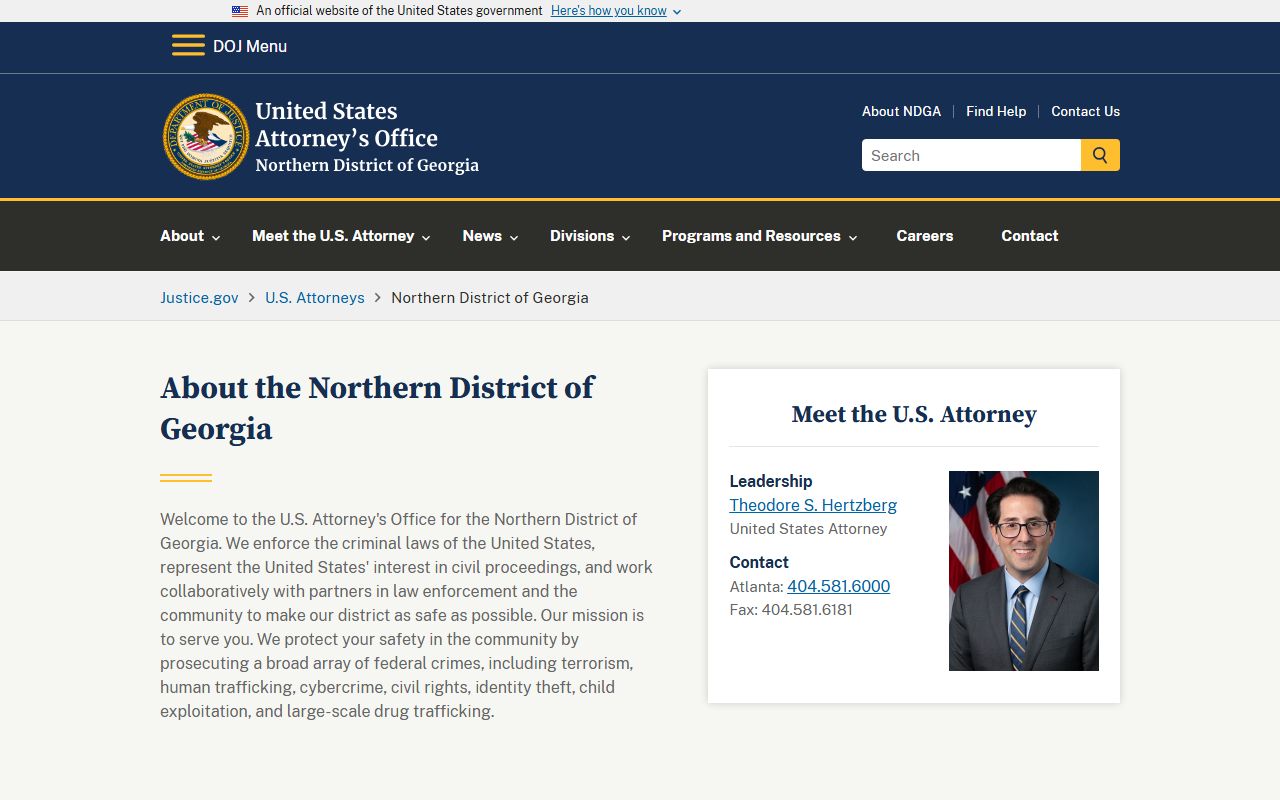
Federal prosecution records should be searched only when the case is federal rather than a Union County Superior Court matter.
Restricted Union County Criminal Records
Restricted criminal court records in Union County can include juvenile matters, sealed cases, restricted criminal-history records, mental-health information, minor-identifying information, Social Security numbers, financial account data, and protected victim information. Juvenile records are generally not open like adult files. A case may also be redacted while still remaining partly public.
Use official channels for record status. The Clerk of Superior Court can address filed court records. The District Attorney may be involved in post-2013 Georgia record restriction. The arresting agency may be involved in older restriction requests. If a person needs a court order to seal or restrict a case file, legal advice should come from a Georgia attorney, not court staff.
A local workflow image from FetchYourNews carrying a GBI release is included because the manifest assigns it to criminal court records.
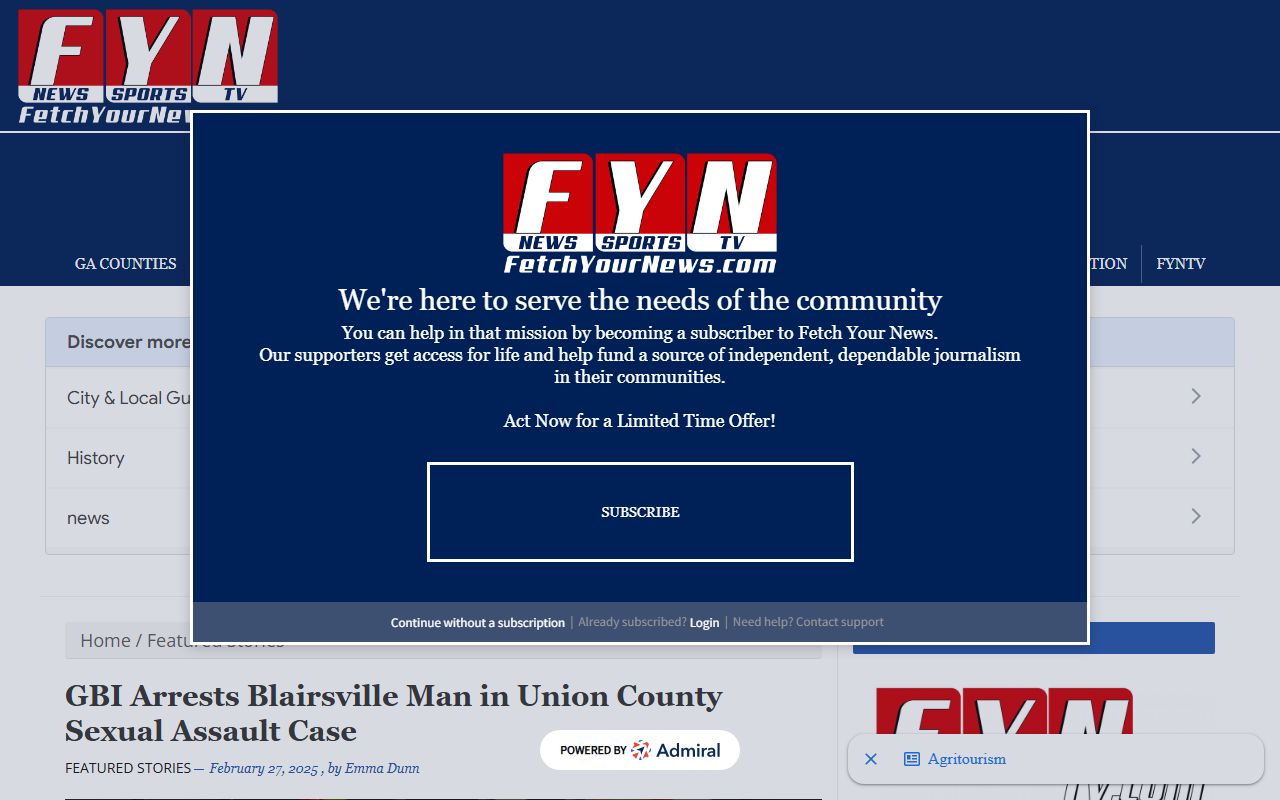
The source is useful only as a workflow example: investigation and arrest are not the same as final court disposition.
Custody Records Are Separate
Custody tools can help locate where a person is held, but they do not provide the complete Union County criminal court record. The Union County Jail is a local pretrial and short-sentence facility, while GDC handles sentenced state offenders after transfer. A custody search may show current location or status. The criminal court file shows the charges, docket, plea, disposition, and sentence that explain why custody occurred.
For county jail custody, use the sheriff and jail contacts. For state custody, use the Georgia Department of Corrections offender query. For a criminal court case, use the Clerk of Superior Court or the court that handled the specific stage. Those access paths should not be merged into one record type.
The final criminal-record manifest image comes from the Federal Bureau of Prisons inmate locator.
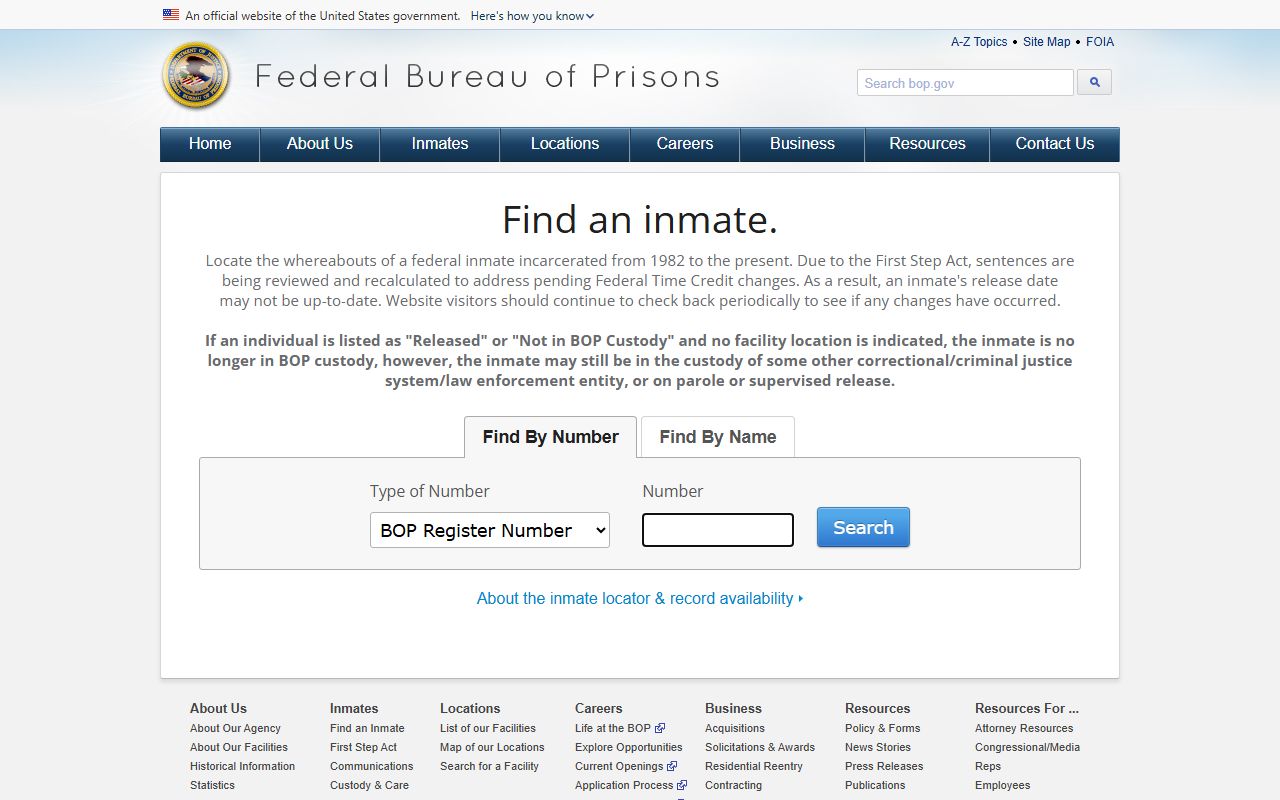
Federal custody tools can confirm location after federal sentencing, but local criminal court records still come from the Union County or Georgia court system.